Let’s face it: digital marketing has always been the agile part of the marketing discipline.
Yes, pretty websites and digital ads and blogs that are written by people the way they would speak are out there flooding the digital marketing channels. So what? Things online change fast. Online competition is fierce. The chances for the modern marketer to be heard in a busy digital marketing space are limited. Some employ large digitally focussed marketing teams with specialists in PPC, SEO, Voice of Customer (VoC) and analytics, whereas others just let their marketing managers do some basic digital marketing tasks without investing a lot into marketing or in their department’s professional development in digital channels.
From my own personal experience, B2B sectors are notorious for needing digital expertise but they are either not willing to pay for it or nurture digital marketing learning in their internal marketing teams as a long-term investment. The excuse is usually that their products are not part of the FMCG category, they are mostly selling the people and the services instead and their product is part of their services mix.
So what’s the hype about an agile digital marketing plan?
I have written about agile marketing a bit more in-depth in one of my previous blogs. Yes, there are marketers out there that are still rigid in not changing their marketing plans because they feel they have “no control” over things and they cannot function. And they tend to be in my team and I have to work with them, which I often find very frustrating.
There needs to be a thorough yearly plan and optimisation of the digital channels available, picking methodical digital techniques for each channel and focusing on driving technical results. Because let’s face it, this Google algorithm is changing more often than we would like as marketers and sometimes, it makes it hard to keep up. In layman’s terms, we need to have an agile digital marketing plan. How do we do that? By following marketing structure – sorry “fluffy” marketers, we need structure sometimes to plan strategies and give you the chance to make beautiful stuff!
Although quite old as a marketing rule – still remember it from an Ad Age article I read back in 2008 -, the “70/20/10” approach is needed to map all the things you need as a marketer into a structured digital approach and keep the agility of your marketing activities going. So what does that approach mean and why should we care?
- 70% of the digital marketing activities needs to be planned as “marketing as usual” activities
- 20% of the activities left need to be responsive, machine-driven and automated
- 10% of the activities need to be on-the-spot responsive – which means you need the human resources on a somehow 24/7 basis to be on top of things on your digital channels, be it social media, news channels, TV.. any marketing channel that can be used to create that spontaneous, real-time content to draw attention and start engagement.
Does the 70/20/10 rule apply in agile digital marketing planning in 2020-21?
The channels of digital marketing are no longer independent and, therefore, we need to make sure that omnichannel strategies are deployed to maximise impact within any marketplace. Channels should not be used in isolation and should also not be removed from the ATL marketing mix for quick wins. Attribution modelling looks at how the different elements of the marketing mix are interacting and influencing each other; therefore, a clear understanding of owned, paid and earned media is imperative to the choice of the right agile digital marketing strategy.
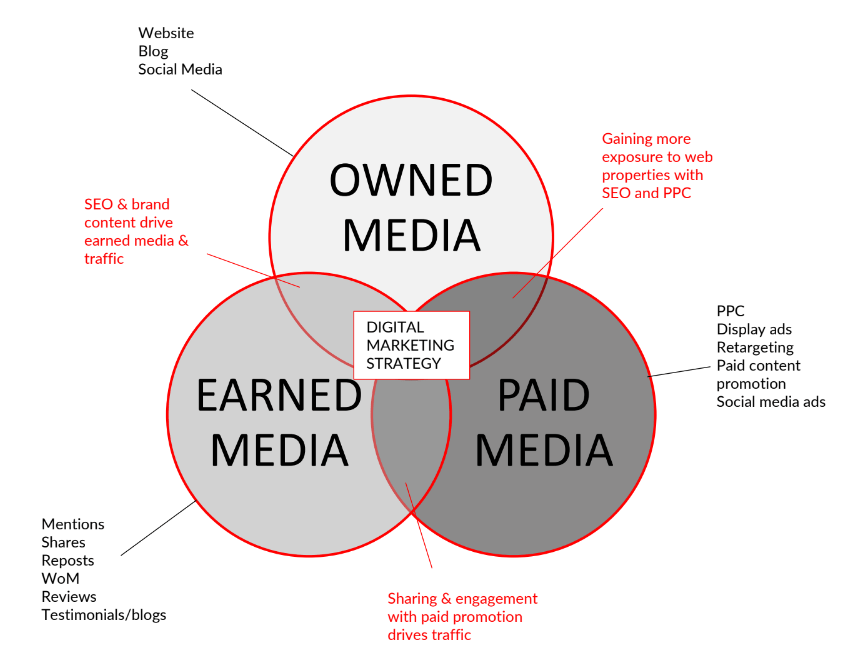
The most obvious area of growth for a digital marketing mix is in how display advertising is bought and delivered. With the rise of ad exchanges, supported by platforms that talk to each other in real time, it makes a lot of sense to use automation and programmatic marketing to drive efficiencies and optimise campaigns against set objectives. Other increasingly interesting areas of automated marketing efforts include:
- Pay Per Click (PPC); seems like PPC has always been a rule-driven area of growth (mostly Google rules), however, with the change of the algorithms and the introduction of natural language processing (NLP), how the customer interacts with an ad has become more sophisticated and more non-robotic as before. Well, at least at its initial stage. The search engines still take into account real-time variables to help the customer make the best decision for their enquiry.
- Email marketing; back in the day (yes, I am THAT old), email marketing started off as ‘batch and blast’. It became more segmented and automated as the years went by and the list of customers grew bigger. Sending emails out is now regarded as “spam”, unless an event triggers and justifies the email landing i
o - Social media; a different beast overall to tackle. Social media must be addressed more systematically by companies, with cohesive yearly planning on big days and not spammy posts, but fully automated ones. That way, a social media owner can engage with clients, as it is the engagement that counts and not the likes. Engagement brings purchase, likes bring vanity. And vanity does not add ££ or $$ at the bottom line. As with email, and often as part of eCRM, customer conversations and messaging has to be as personal as possible to be effective, but as programmatic as possible to be scalable and effective. You want good social media accounts to follow and learn from? Innocent, Wendy’s, Adobe, Google Workspace.
So, how does all of the above fit with the 70/20/10 marketing rule?
Some people think that doing that 70% all year long with some tweaks here and there gets the job done and the paycheque coming through the door. Others think that the 10% of the responsive activities need to be done at a 70% approach. Some also think that marketing should be automated as much as possible so we can have more time to spend on strategic decisions. The truth is that the right approach is usually dictated by the brand, the product offering and the more digitally savvy target audience. It also depends heavily on the technologies and the marketing service software providers you use for each channel. This is why the 70/20/10 rule needs to adapt with the ages and the technology and definitely needs a revamp.
The x/y/z approach still needs to be applied to create and execute a cohesive, agile marketing strategy to maximise results. For B2B areas, I personally focus on quarters and build content in themes for all marketing channels used. Even if I work in a very “corporate” environment in legal tech, I always challenge my boss with making things professional but humane. Customers are still human beings and are influenced heavily from B2C flashy e-commerce marketing campaigns. But generally lawyers always want it their way no matter what!
What I suggest the numbers to change to? Ideally, it needs to be 50/20/30. Why do I put a heavy focus on the agile part of the planning? Because things change constantly and you are only able to get the attention of the customer for 15 seconds a day, if you are lucky. Being more agile and building that humane value of your brand in real time, speaking about things that are of “now”, creating event-triggered content to start engagement, it can give the brand purpose and increase the sense of community “belonging”. I always give the example of Backstreet Boys, my favourite 90’s boyband. Being part of the BSB community, keeping up with the news and being penpals with like-minded fans, has given me a sense of belonging and made me more prone to buy magazines like ToTP and the german Bravo!Hits, as well as ask my mother to buy me exclusive merchandise. Because “I wanted it that way”. And all of that without a digital marketing strategy (or digital access in this matter) in place..
How to use agile marketing strategy in an execution of a marketing plan
Great marketing combines both ideas and automation into a plan. The execution of that plan by the various teams is what makes or breaks that plan and the strategy proposed. When I was working for a data software company in the technology sector, we wanted to do some ATL advertising to increase our subscribers on one of the product offerings. TV was the preferred medium of our target audience and, hence, we decided to go all out on a TV ad. To maximise our return on investment, we created a preview spot on YouTube and announced it on our social media accounts and re-posted with new information at an interval of 3 days for 3 weeks. We also created an internal event where we explained the full strategy behind the reasoning of the advert, previewed it with the company members and gave away freebies to get some guerrilla marketing tactics involved. We also started weekly emails to amplify the social media posts and drive views on our digital accounts and got our social media managers to work tirelessly around the clock to respond to customers on Twitter and being creative with their posts, depending on the events of the day or the week, whether these were of political or satirical character. After 2-3 months of a mixture of reactive, proactive and programmatic marketing on both online and offline platforms, we reached the goal of our 2m followers. As a “thank you”, we created a Cadbury chocolate after our name and sent it through to our subscribers to give them the good news, blowing up our social media mentions and increased engagement threefold. Great ROI results – find more about marketing metrics that I was taught to use in my other blog post.
Great marketing planning of this sort will not only be able to strengthen the value of the marketing efforts, but it will create agile methods of piggybacking on the best efforts of others to seize on predicted and unpredicted events. Having the right technology and people in place to react swiftly to marketing opportunities as they occur is clearly important, whether you are within the B2B or the B2C sector, regardless of your product offering. However, if you have an agile digital marketing plan in place, then it gives you the opportunity to capitalise on real-time interaction with your target audience and capture some value before and during the planned marketing efforts.
Are you done talking about agile marketing?
The answer to that is “No” – I am done writing about it for now, though. I always talk about agile marketing plans and try not to overhaul my existing marketing plans. Talking from experience, doing a lot will only get you tired and will not leave you space for things that will drop off or come into place throughout the year. Doing the right things for each of your product offerings through the right digital marketing channels not only keeps your marketing efforts agile, but also keeps you sane. And sanity is hard to find nowadays.
Do you agree with the above? Let me know either on the comments below or via email on vdiamanti@gmail.com . Thank you for reading up to the end of my blog. For more information on agile marketing, FMCG or measuring ROI please visit my other blogs.
 violetdiamanti.com